Is it Bison or Buffalo? | The American Buffalo | Ken Burns
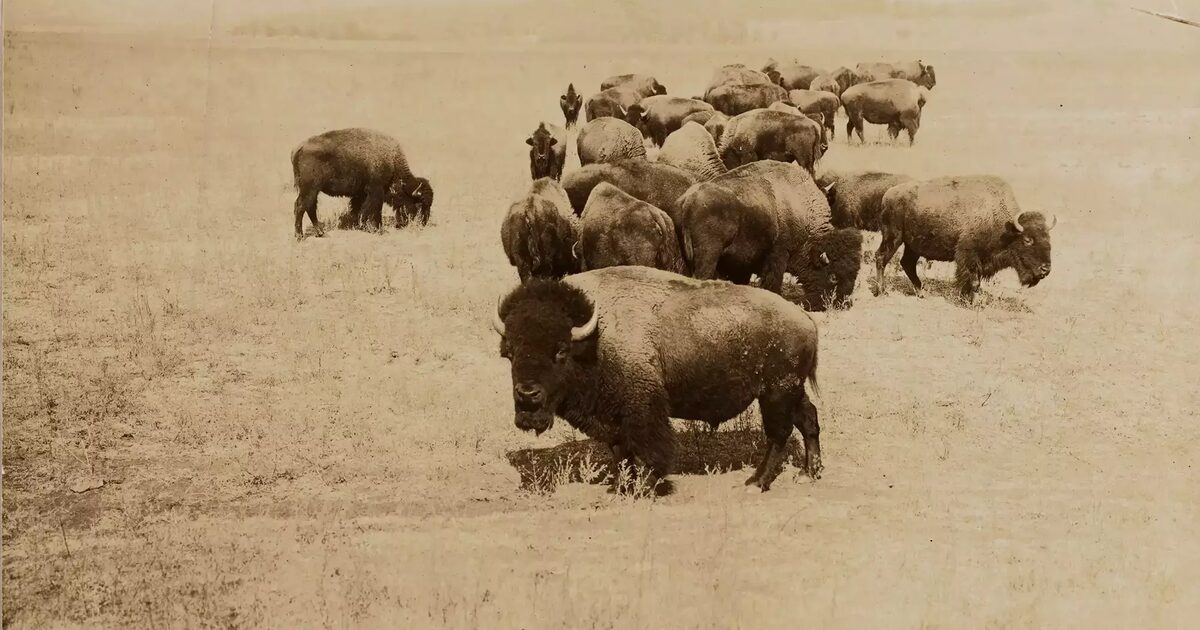
Hundreds of place names in the United States include the word “buffalo” because herds of them once roamed in great numbers from the Atlantic coast to west of the Rocky Mountains. Maps of the colony of Georgia showed multiple features called Buffalo Creek and Buffalo Swamp; the Treaty of Augusta in 1773 designated Great Buffalo Lick as a key boundary between the colony and Native nations. Daniel Boone’s “Wilderness Trail,” leading settlers from Virginia through the Cumberland Gap and over the Appalachian Mountains into what is now Kentucky, was also called a “buffalo trace,” because the animals had been using it for centuries. In what is now West Virginia, settlers called 23 different streams Buffalo Creek or Buffalo Run, and there were six different Buffalo Forks and Buffalo Licks on their maps. Today, there are 14 states with a city or town named Buffalo, only five of them in the West.
By the late nineteenth century, the scientific name bison (which comes from the Latin word for “wild ox”) became the preferred word among trained naturalists. William T. Hornaday’s major book, The Extermination of the Bison, appeared in 1889. The organization that he, President Theodore Roosevelt and others formed in 1905 to help save the animal from extinction was named the American Bison Association.
But still, the usage of “buffalo” has persisted, as it has with many other animals whose popular names differ from their scientific names––think of prairie dogs, which are actually a type of ground squirrel. The common usage and the more precise scientific terminology are both valid, acceptable, and interchangeable.
So, is it “buffalo” or “bison”? We think the answer is “yes” to both. Accepting both terms has the added benefit of helping future generations understand the names of so many places in the nation and their connection to our national mammal’s history. The lyrics to “Home on the Range” (“oh, give me a home, where the buffalo roam . . .”) do not have to be changed. And the tombstone for “Buffalo Bill” Cody doesn’t need to be corrected.
Top photo: Bison from the Wichita National Bison Herd, southwestern Oklahoma. Courtesy of The Library of Congress
ncG1vNJzZmivp6x7sa7SZ6arn1%2Bgsq%2Bu1KulrGeknbJurcyeqaKbkaN6o8HFn5ilp1%2BewG6102aZoqufo3qwvoybrJ%2BekaG8